The Enduring Power of Visual Instruction: Why the Teacher Near Blackboard Explains Task to Students Remains Relevant
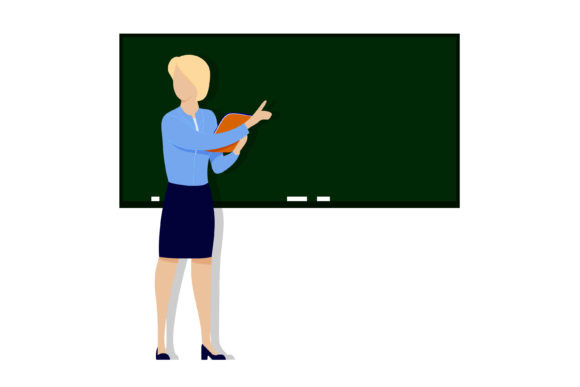
In an era dominated by digital dashboards, interactive tablets, and asynchronous video lectures, one might assume that traditional classroom imagery has become obsolete. However, the iconic scene where a teacher stands near blackboard and explains task to students continues to hold profound significance in educational psychology and pedagogical practice. This visual is not merely a nostalgic relic of twentieth-century schooling; it represents a fundamental mode of human communication that facilitates clarity, focus, and communal learning. Whether in a primary school setting or a university lecture hall, the act of physically demonstrating a concept on a vertical surface remains a cornerstone of effective knowledge transfer.
The persistence of this method highlights a critical truth about education: technology is a tool, but cognition is human. When educators utilize physical space to map out ideas, they engage multiple sensory pathways for their learners. This article explores the multifaceted value of this instructional approach, examining its cognitive benefits, its adaptability across different educational levels, and its surprising relevance in modern professional training environments.
Cognitive Advantages of Linear Visual Explanation
The human brain processes visual information significantly faster than text alone. When a teacher writes on a blackboard, whiteboard, or smartboard, they are engaging in a process known as "dynamic visualization." Unlike a pre-prepared slide deck, which presents information in static chunks, live writing allows students to follow the logical progression of thought in real-time. This temporal alignment between the creation of the content and its consumption helps reduce cognitive load.
Consider the difference between viewing a completed complex equation and watching it being derived step-by-step. In the latter scenario, the learner sees the connections between variables, understands the rationale behind each transformation, and can anticipate the next move. This is why the image of a teacher near blackboard explains task to students is so powerful—it captures the moment of intellectual construction. The audience is not just receiving data; they are witnessing the architecture of an argument or solution being built before their eyes.
- Pacing Control: The instructor controls the speed of information delivery, allowing time for note-taking and mental processing.
- Error Modeling: Mistakes made during live explanation provide valuable learning opportunities, showing students how to troubleshoot and correct errors.
- Spatial Memory: Students often remember where specific information was located on the board, aiding in recall during assessments.
Adaptability Across Educational Levels
The utility of standing near a board to explain tasks is not limited to a specific age group or academic discipline. Its application varies, yet the core principle of guided visual instruction remains constant from early childhood education through to advanced postgraduate studies.
Primary and Secondary Education
In K-12 settings, the blackboard serves as a focal point that minimizes distractions. Younger students benefit from the clear, authoritative presence of the teacher who anchors the lesson. When a teacher explains a task visually, they provide a scaffold for students who are still developing abstract thinking skills. For example, in mathematics, breaking down a word problem into visual components on the board helps bridge the gap between language and numerical logic. In language arts, diagramming sentences or mapping story structures visually reinforces grammatical and narrative concepts.
University and Higher Education
At the university level, the dynamic shifts from basic instruction to complex theoretical exploration. Here, the professor standing near the blackboard is often engaging in Socratic dialogue or deriving complex proofs. In fields such as physics, engineering, and philosophy, the ability to spontaneously expand on a student’s question by adding to the existing diagram is invaluable. It demonstrates expertise and flexibility, showing that knowledge is not a fixed product but a living, evolving discourse. The vector-like precision of a well-drawn diagram in Jpeg or Eps format may be useful for digital distribution, but the live, imperfect, and iterative nature of hand-drawn explanations fosters deeper engagement.
Bridging the Gap Between Digital and Physical Learning
While digital tools offer immense capabilities, they often suffer from "presentation paralysis," where the polish of the medium distracts from the message. A slide deck can feel impersonal and final. In contrast, the raw immediacy of chalk on slate or marker on whiteboard feels authentic. This authenticity builds trust between the educator and the learner. Students perceive the teacher as actively working through the problem alongside them, rather than simply reciting memorized content.
Moreover, hybrid learning models have reintroduced the importance of the physical board. With high-definition cameras streaming live classrooms to remote participants, the teacher who effectively uses the board ensures that both in-person and online students receive the same high-quality visual experience. The key is legibility and structure. Educators must be mindful of their handwriting, use color coding strategically, and organize the board space logically to maximize comprehension for all viewers, regardless of their physical location.
Practical Applications in Professional Training
The principles underlying the classic classroom scene extend far beyond academic institutions. In corporate training, workshops, and team brainstorming sessions, the facilitator who stands near a flip chart or whiteboard to explain a task often achieves better results than one who relies solely on handouts or screens. This is particularly true in agile development, design thinking, and strategic planning.
When a team leader maps out a workflow or a project timeline on a large vertical surface, it creates a shared mental model. Team members can point to specific areas, suggest modifications, and see the immediate impact of their input. This collaborative aspect transforms the passive act of listening into an active process of co-creation. The visual artifact created during the session serves as a reference point for future discussions, ensuring that everyone remains aligned with the agreed-upon tasks and goals.
- Clarify Ambiguity: Visualizing abstract business concepts reduces misinterpretation.
- Encourage Participation: An open board invites colleagues to add ideas, fostering a culture of inclusivity.
- Document Decisions: The final state of the board acts as an informal record of the decision-making process.
Enhancing the Traditional Method with Modern Techniques
To maximize the effectiveness of this timeless teaching method, educators and trainers can integrate modern pedagogical strategies. It is not enough to simply write; one must teach intentionally. Effective board work involves planning the layout before starting, using contrasting colors to highlight key relationships, and regularly stepping back to allow students to view the whole picture.
Furthermore, combining the physical board with digital resources can create a blended learning experience. For instance, a teacher might derive a formula on the blackboard while simultaneously projecting related real-world data or interactive simulations on a nearby screen. This dual-coding approach reinforces learning by connecting theoretical abstractions with concrete applications. The teacher acts as the bridge, guiding students between the static clarity of the board and the dynamic complexity of the digital world.
It is also crucial to recognize the accessibility implications of board work. Educators must ensure that their writing is large enough to be read from the back of the room and that they do not block the view while writing. Verbal narration should accompany visual actions to support students with visual impairments or those who process auditory information more effectively. By being mindful of these details, the teacher ensures that the explanation is inclusive and effective for every learner in the room.
The Human Element in Knowledge Transfer
Ultimately, the enduring power of the teacher near the blackboard lies in the human connection it facilitates. Education is not merely the transmission of data; it is a social and emotional process. The physical presence of the instructor, their body language, and their responsiveness to student cues create an environment conducive to learning. When a teacher turns from the board to face the class, making eye contact and checking for understanding, they validate the students' efforts and encourage further inquiry.
This interaction cannot be fully replicated by automated systems or pre-recorded videos. The spontaneity of live explanation allows for tailored responses to the unique needs of the group. If students look confused, the teacher can rephrase, redraw, or provide a different example immediately. This adaptability is the hallmark of expert teaching. It demonstrates a deep understanding of the subject matter and a genuine commitment to student success.
As we continue to navigate the complexities of modern education, we should not discard traditional methods that have proven their worth over centuries. Instead, we should refine and integrate them. The image of the teacher stands near blackboard and explains task to students is a reminder that at the heart of education is a simple, powerful act: one person helping others understand the world. By valuing this interaction, we preserve the integrity and effectiveness of the learning experience, ensuring that knowledge is not just delivered, but truly understood.