The Evolution of Home Education: Integrating the Mother, Teacher, and Pupil Dynamic
The landscape of modern learning has shifted dramatically over the past few decades, moving away from rigid institutional models toward more flexible, personalized approaches. At the heart of this transformation is the concept of home education, a practice that redefines the traditional roles of educator and learner. When we visualize this dynamic, we often picture a Home Education Mother Teacher and Pupil scenario, where the boundaries between parental care and academic instruction blur to create a holistic learning environment. This model is not merely about replicating a classroom at the kitchen table; it is about fostering a deep, intrinsic motivation for knowledge through trusted relationships.
In this comprehensive exploration, we will examine how the triad of the mother, the teacher, and the pupil functions in a domestic setting. We will look at the practical applications of this model, the psychological benefits for the child, and the evolving role of the parent-educator. By understanding these elements, families can better navigate the complexities of homeschooling and ensure that the educational experience is both rigorous and nurturing.
Redefining Roles in the Domestic Classroom
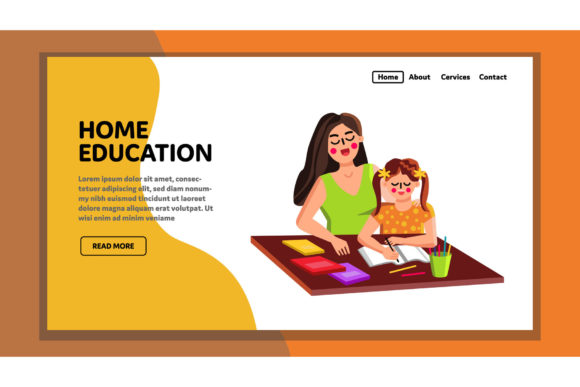
One of the most significant challenges and opportunities in home education is the fluidity of roles. In a traditional school setting, the teacher is an authority figure distinct from the parent. However, in a home environment, the Home Education Mother Teacher And Pupil Kid Vector represents a unified ecosystem. The mother often assumes the dual role of nurturer and instructor, which requires a delicate balance of empathy and discipline.
This duality allows for a level of customization that is difficult to achieve in large classrooms. The mother, acting as the primary facilitator, can observe the pupil’s learning style in real-time. Is the child a visual learner who benefits from diagrams? Or do they thrive with hands-on activities? Because the educator is also the parent, there is an inherent understanding of the child’s emotional state, energy levels, and interests. This insight enables the creation of a curriculum that is not only academically sound but also emotionally resonant.
Furthermore, the pupil is not a passive recipient of information. In this dynamic, the child is encouraged to take ownership of their learning journey. The absence of peer pressure and standardized testing schedules allows the pupil to explore subjects in depth, asking questions that might be sidelined in a busy classroom. This agency fosters critical thinking and self-directed learning skills that are invaluable in higher education and the workforce.
The Visual Language of Learning: From Concept to Reality
Visual aids play a crucial role in reinforcing educational concepts, especially for younger learners. The imagery associated with home education often features a Woman Parent Teaching Little Girl And Child Writing In Copybook, Lesson Home Education. This specific visual narrative captures the essence of focused, one-on-one instruction. It highlights the intimacy of the learning process, where attention is undivided, and feedback is immediate.
For educators and content creators, understanding the visual representation of this dynamic is essential. Resources such as Characters Web Flat Cartoon Illustration are widely used in educational materials, websites, and apps to make learning approachable and engaging. These illustrations often depict warm, inviting scenes that reduce anxiety around learning difficulties. The use of flat design styles ensures that the focus remains on the interaction between the characters rather than distracting background details.
When selecting or creating visual content for home education resources, format versatility is key. Professionals often require assets in multiple formats to suit different platforms. For instance:
- JPG files are ideal for web blogs and social media posts due to their small file size and compatibility.
- PNG formats offer transparency, making them perfect for overlaying text or integrating into diverse design layouts without white backgrounds.
- EPS and AI files are vector-based, allowing for infinite scalability without loss of quality, which is essential for print materials like worksheets, posters, and textbooks.
- PSD files provide layered editing capabilities, enabling designers to customize elements such as colors, text, and character expressions to match specific branding or educational themes.
By leveraging these various formats, educators can create a cohesive visual identity that supports the learning objectives. Whether it is a simple icon representing a math problem or a detailed scene of a science experiment, the right visual aid can bridge the gap between abstract concepts and concrete understanding.
Practical Applications and Daily Workflows
Implementing a successful home education strategy requires structure, but not rigidity. The daily workflow in a home school often differs significantly from the bell-schedule routine of traditional schools. Instead of fixed periods, learning may occur in blocks or through project-based immersion. This flexibility allows the Home Education Mother Teacher and Pupil to adapt to natural rhythms and unexpected opportunities for learning.
Consider a typical morning. Rather than starting with a strict timetable, the day might begin with a shared reading session. This communal activity sets a tone of curiosity and connection. Following this, the mother might guide the pupil through core subjects like mathematics or language arts. Because the ratio is one-to-one, misconceptions can be addressed immediately. If a child struggles with a particular math concept, the teacher can pause, re-explain using different methods, or use physical objects to demonstrate the principle.
Afternoons might be dedicated to experiential learning. This could involve outdoor exploration, art projects, or community service. The integration of life skills into the curriculum is a hallmark of home education. Cooking becomes a lesson in chemistry and fractions; gardening teaches biology and responsibility. These real-world applications reinforce academic knowledge and demonstrate its relevance.
Benefits for the Pupil
The advantages of this personalized approach are manifold. Students in home education environments often exhibit higher levels of academic achievement, particularly in reading and mathematics. Beyond academics, they develop strong social skills through interactions with diverse age groups in community settings, rather than being confined to peers of the same age. This multi-age socialization mirrors real-world environments, preparing children for adult interactions.
Moreover, the emotional safety provided by the parent-teacher relationship reduces stress and anxiety. Children feel safe to make mistakes, which are reframed as learning opportunities rather than failures. This growth mindset is crucial for long-term success and resilience.
Considerations for the Parent-Educator
While the benefits are significant, the role of the mother as teacher is demanding. It requires patience, organizational skills, and a commitment to continuous learning. Parents must stay informed about educational standards and resources to ensure their child receives a well-rounded education. Networking with other homeschooling families can provide support, resource sharing, and social opportunities for both parents and children.
It is also important to recognize when external help is needed. Many home educating families supplement their efforts with online courses, tutors, or co-op classes for subjects outside their expertise. This collaborative approach ensures that the child receives high-quality instruction in all areas while maintaining the core benefits of home education.
The Future of Personalized Learning
As technology advances, the tools available to the Home Education Mother Teacher and Pupil continue to expand. Digital platforms offer interactive lessons, virtual field trips, and global connectivity. These resources complement traditional methods, providing a rich, multimedia learning experience. The integration of AI-driven adaptive learning software can further personalize instruction, adjusting difficulty levels in real-time based on the pupil’s performance.
However, technology should enhance, not replace, the human connection. The core strength of home education lies in the relationship between the educator and the learner. No algorithm can replicate the encouragement of a proud parent or the tailored explanation of a caring teacher. As we move forward, the most successful home education models will be those that blend technological efficiency with human warmth.
In conclusion, the dynamic of the Home Education Mother Teacher and Pupil offers a powerful alternative to traditional schooling. By embracing flexibility, personalization, and strong relational bonds, families can create an educational environment that nurtures both academic excellence and character development. Whether through structured lessons or spontaneous discoveries, the journey of home education is one of mutual growth, where both teacher and pupil learn from each other every day.