Why The Flat Character of the Presentation Is Your Secret Weapon for Clearer Communication
We have all sat through that meeting. You know the one. The slides are cluttered with dense text, the stock photos feel disconnected from reality, and your attention drifts somewhere between the third bullet point and the fire exit. In a world where attention is the most scarce currency, The Flat Character of the Presentation offers a refreshing alternative. It is not just about aesthetics; it is about clarity, relatability, and effective storytelling.
When we talk about flat design characters, we are referring to those clean, two-dimensional illustrations that have become ubiquitous in modern digital interfaces. Think of the friendly figures you see in onboarding screens, corporate training modules, or educational apps. They are simple, colorful, and devoid of unnecessary shading or realistic textures. But why do they work so well? And more importantly, how can you leverage them to elevate your own projects?
Bridging the Gap Between Complex Ideas and Human Connection
The primary power of using flat character illustrations lies in their ability to humanize abstract concepts. Whether you are a marketer explaining a new SaaS platform, an educator breaking down statistical data, or an entrepreneur pitching a business strategy, you are ultimately trying to connect with people. Real photography can sometimes feel staged or impersonal. Hyper-realistic 3D renders can be distracting or uncanny. Flat characters, however, strike a perfect balance.
Consider a scenario where you are designing a deck for a leadership training workshop. You need to illustrate the concept of teamwork and communication. Instead of using a generic photo of people shaking hands, you can use a vector illustration of a diverse group of colleagues sitting around a board, engaged in discussion. These characters can be customized to reflect your brand’s color palette, creating a cohesive visual identity that feels intentional and professional. This approach helps the audience focus on the interaction and the message, rather than getting lost in photographic details.
Versatility Across Professional and Educational Settings
One of the greatest advantages of incorporating these assets into your workflow is their sheer versatility. Because they are typically delivered in scalable formats like SVG, EPS, and AI, along with raster options like PNG and JPG, they fit seamlessly into almost any design environment.
- Corporate Training and HR: Use them to create engaging employee handbooks, onboarding materials, or internal newsletters. A flat character representing a businesswoman or a young professional can guide employees through complex policy changes, making the content feel less intimidating and more approachable.
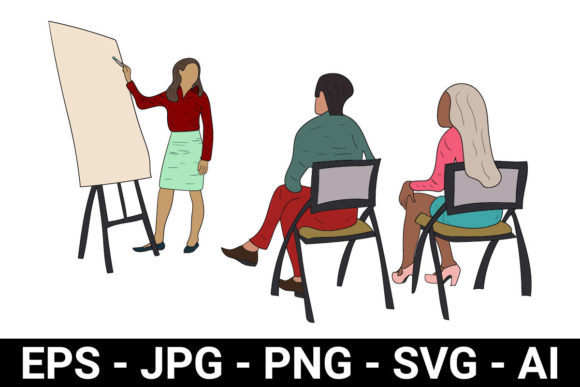
- E-Learning and Education: Teachers and instructional designers can use these illustrations to break down difficult subjects. Imagine a teacher character pointing to a chart or statistics on a whiteboard. It creates a narrative flow that keeps students engaged, turning a dry lecture into a visual story.
- Marketing and Web Design: For bloggers and small business owners, these characters are invaluable for landing pages and blog headers. They add personality without slowing down site load times, which is crucial for SEO and user experience. A simple illustration of a person working on a laptop can convey "productivity" faster than a paragraph of text.
Enhancing Storytelling in Business Presentations
Let’s dive deeper into the context of a high-stakes presentation. You are standing in front of potential investors or key stakeholders. Your goal is to convey strategy, growth, and reliability. Using flat characters allows you to build a visual narrative that mirrors your verbal pitch.
For instance, if you are discussing company growth, you might show a character climbing a stylized mountain or looking at an upward-trending graph. If you are talking about customer support, you could illustrate a friendly representative helping a client. These visuals act as cognitive anchors. They help your audience retain information by associating data points with memorable images. Furthermore, because these characters are often gender-neutral or diverse, they promote inclusivity, showing that your brand values together effort and broad representation.
The "flat" style also ensures that your slides remain uncluttered. In design, less is often more. By removing realistic shadows and textures, you reduce visual noise. This allows the viewer’s eye to travel naturally from the headline to the key data, guided by the gaze or gesture of the illustrated character. It is a subtle psychological cue that directs attention exactly where you want it.
Practical Considerations Before You Download
While the benefits are clear, choosing the right assets requires some thought. Not all flat character packs are created equal. When you are looking for resources, such as a ZIP folder containing various file types, consider the following:
- Consistency is Key: Ensure that all characters in the set share the same line weight, color scheme, and stylistic quirks. Mixing different styles can look amateurish and distract from your message. Look for packs that offer a wide range of poses and emotions so you can tell a complete story without switching artistic directions.
- File Format Flexibility: As mentioned, having access to vector files (AI, EPS, SVG) is crucial for scalability. You might need a tiny icon for a footer or a large banner for a conference backdrop. Vectors allow you to resize without losing quality. PNGs with transparent backgrounds are essential for quick drag-and-drop usage in PowerPoint or Canva.
- Customizability: The best resources allow you to tweak colors easily. Your brand might use specific shades of blue and orange. If the character pack is rigid, you will spend hours trying to match hues. Look for layered files where you can adjust individual elements like skin tone, clothing, or background accents.
Making the Concept Work for You
Ultimately, The Flat Character of the Presentation is about more than just decoration. It is a tool for better communication. Whether you are a freelancer creating a portfolio, a manager leading a meeting, or an educator facilitating a lecture, these illustrations help you connect with your audience on a human level.
Think about the last time you felt truly engaged by a presentation. Chances are, it wasn’t because of the font choice alone, but because the presenter made the content feel relevant and accessible. Flat characters facilitate this by stripping away the unnecessary and focusing on the essence of the interaction: people solving problems, learning together, and achieving success.
So, the next time you open your design software or slide deck builder, consider swapping out that generic stock photo for a thoughtful, flat-style illustration. It might just be the small change that makes your big idea land with impact. Remember, the goal is not to entertain for the sake of entertainment, but to clarify, engage, and inspire action. And in that regard, a well-placed cartoon character can be surprisingly powerful.
By integrating these elements into your office workflows, corporate communications, and educational materials, you are not just following a design trend. You are adopting a user-centric approach to visual communication that respects your audience’s time and intelligence. That is the true value of good design.