Jeduct Education: Strategic Visual Assets for Modern Learning Platforms
In the rapidly evolving landscape of digital education, the distinction between a functional learning management system and an engaging educational experience often lies in the details. Jeduct Education represents more than just a collection of graphics; it is a strategic resource designed to elevate the visual communication of academic and professional training environments. For educators, entrepreneurs, and developers building online courses, university portals, or corporate training modules, the visual layer is not merely decorative—it is instrumental in user retention, comprehension, and brand perception.
This analysis explores how integrating high-quality, customizable vector illustrations can transform your educational project. We will examine the practical applications of the Jeduct Education pack, discussing why thoughtful design choices matter for long-term engagement and how to leverage these assets to support broader business and pedagogical goals.
The Strategic Value of Visual Consistency in EdTech
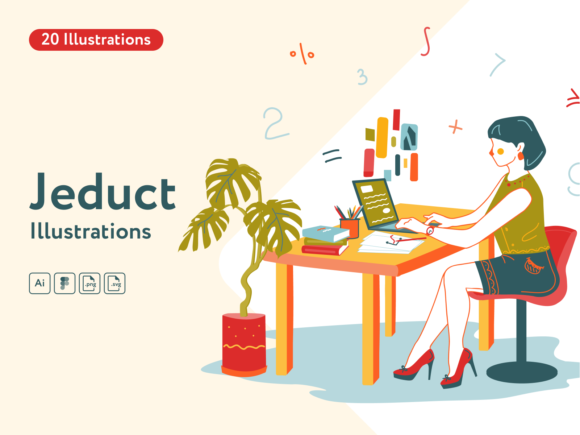
When launching an educational platform, whether it is a niche skill-sharing site or a comprehensive university portal, consistency is paramount. Users subconsciously assess credibility through design coherence. A disjointed visual identity—where clip art clashes with modern UI elements—can erode trust before a single lesson is consumed. Jeduct Education addresses this by providing a unified aesthetic across twenty distinct illustrations. These assets are not random; they are curated to reflect various facets of the learning journey, from solitary study and collaborative group work to the triumph of graduation and the complexity of scientific inquiry.
By utilizing a cohesive set of vectors, you ensure that every touchpoint, from landing pages to mobile app interfaces, speaks the same visual language. This consistency reduces cognitive load for the user, allowing them to focus on the content rather than navigating a visually chaotic environment. For decision-makers, this means investing in assets that scale with your brand, ensuring that as your course catalog expands, your visual identity remains robust and professional.
Customization as a Tool for Brand Alignment
One of the most significant advantages of the Jeduct Education collection is its adaptability. Generic stock imagery often fails because it does not align with specific brand guidelines. However, these illustrations are provided in vector formats, including SVG and AI files, which are fully editable. This technical flexibility allows designers and developers to adjust colors, shapes, and compositions to match exact brand palettes.
Consider a fintech education startup aiming to convey trust and stability. They might adjust the default vibrant hues of the illustrations to deeper blues and grays, maintaining the friendly, approachable style while reinforcing their corporate identity. Conversely, a creative arts platform might amplify the saturation to evoke energy and inspiration. This level of customization ensures that the visuals do not just occupy space but actively reinforce your brand’s positioning. It transforms generic assets into proprietary-looking design elements without the prohibitive cost of custom illustration commissions.
Optimizing for Multi-Platform Responsiveness
Modern learners access content across a fragmented device ecosystem. A student might begin a lecture on a desktop during the day and review notes on a smartphone during their commute. The responsiveness of your visual assets is critical in this context. Vector-based illustrations, such as those found in Jeduct Education, are inherently resolution-independent. Unlike raster images that pixelate when scaled, vectors remain crisp at any size.
This technical attribute supports a "build once, deploy everywhere" strategy. Whether embedded in a high-resolution PDF syllabus, displayed on a 4K monitor, or rendered on a small mobile screen, the integrity of the illustration is preserved. For developers, this simplifies the asset pipeline, reducing the need to generate multiple file sizes for different breakpoints. The inclusion of high-res PNGs alongside vector files offers immediate usability for quick prototypes or platforms with limited vector support, ensuring a smooth launch regardless of technical constraints.
Enhancing User Experience Through Narrative Imagery
Effective educational design tells a story. The twenty illustrations in this pack cover a broad narrative arc of the educational experience. By strategically placing these images, you can guide the user’s emotional journey. For instance, using an illustration of a confused student surrounded by books on a troubleshooting page can create empathy and reduce frustration. Placing an image of a celebratory graduation scene on a completion certificate reinforces the sense of achievement.
This narrative approach moves beyond decoration to function. It helps in:
- Breaking up text-heavy content: Long-form articles or complex lesson plans can be daunting. Relevant illustrations provide visual rest points, improving readability and retention.
- Clarifying abstract concepts: Visual metaphors can simplify complex ideas, making them more accessible to diverse learning styles.
- Humanizing digital interactions: In an increasingly automated world, illustrations of people interacting, studying, and teaching remind users that there is a human community behind the screen.
For marketers and bloggers, these images serve as powerful hooks. An article about "Overcoming Study Burnout" paired with a relatable, stylized illustration of a tired student is far more likely to attract clicks and shares than text alone. This enhances the overall content strategy, driving organic traffic and engagement.
Risks of Unintentional Design Usage
While Jeduct Education provides high-quality assets, the risk lies in their application. Using illustrations without a clear strategic intent can lead to visual noise. If every section of a website is decorated with colorful graphics without regard for hierarchy or relevance, the design becomes cluttered and distracting. This is particularly detrimental in educational contexts where focus is essential.
To mitigate this, adopt a disciplined approach. Define the role of each illustration before implementation. Ask yourself: Does this image clarify the content? Does it reinforce the brand tone? Is it necessary here, or would white space be more effective? Avoid the temptation to use every asset in the pack simply because they are available. Curate selectively to maintain impact. Furthermore, ensure that color adjustments are made with accessibility in mind. High contrast between text and background elements is crucial for readers with visual impairments. Customizing colors should never compromise readability.
Practical Implementation for Different Stakeholders
Different professionals will find unique value in this resource. For entrepreneurs and small business owners launching online courses, Jeduct Education offers a cost-effective way to achieve a polished, professional look that competes with larger institutions. It reduces the time-to-market by eliminating the need for lengthy design briefs and revision cycles with freelance illustrators.
For educators and instructional designers, these assets can enhance lesson materials, making slides and handouts more engaging. The ability to edit vectors means teachers can modify scenes to better reflect specific cultural contexts or subject matters, adding a layer of personalization that resonates with students.
For developers and UX designers, the compatibility with Figma, AI, and SVG formats streamlines the workflow. Assets can be imported directly into design systems, styled via CSS if using inline SVGs, and optimized for performance. This technical ease allows teams to focus on functionality and user flow rather than wrestling with incompatible file types.
Long-Term Value and Scalability
Investing in versatile design assets like Jeduct Education is a decision with long-term implications. As your educational platform grows, you may need to expand your visual library. Starting with a strong, consistent foundation makes it easier to integrate new assets in the future. If you establish a color palette and stylistic guideline based on these initial twenty illustrations, subsequent designs can follow the same rules, ensuring brand continuity even as your team expands.
Moreover, high-quality visuals contribute to perceived value. Users are often willing to pay more for courses and subscriptions that appear professional and well-produced. The polish provided by these illustrations can indirectly support pricing strategies and conversion rates. It signals to the user that care has been taken in every aspect of the product, fostering trust and loyalty.
In conclusion, Jeduct Education is not merely a set of pictures; it is a strategic tool for enhancing communication, branding, and user experience in the education sector. By understanding how to customize, place, and contextualize these illustrations, professionals can create more engaging, credible, and effective learning environments. The key lies in intentional use—aligning visual choices with pedagogical goals and brand identity to achieve meaningful, lasting results.