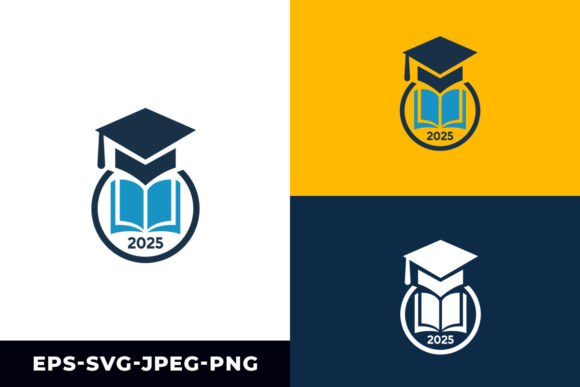
Education Center Logo Design: Integrating Vector Assets into Your Branding Workflow
Establishing a visual identity for an educational institution is more than just selecting colors and fonts; it is about creating a symbol that communicates trust, knowledge, and accessibility. Whether you are launching an online coaching platform, rebranding a local school, or developing a corporate training module, the Education Center Logo Design serves as the cornerstone of your public perception. In professional workflows, this design element is not merely a decorative afterthought but a strategic asset that must be integrated seamlessly across digital and print media.
For professionals, entrepreneurs, and marketers, understanding how to leverage pre-designed templates and vector illustrations can significantly streamline the branding process. By utilizing high-quality, customizable assets, you can reduce production time while maintaining a high standard of visual consistency. This approach allows creators to focus on curriculum development, student engagement, and business growth rather than getting bogged down in the technical intricacies of graphic design from scratch.
The Strategic Role of Vector Illustrations in Educational Branding
When discussing logo design, the format of the file is just as critical as the aesthetic appeal. An Education Center Vector Logo Design Template offers distinct advantages over raster images, particularly in terms of scalability and versatility. Vector graphics are built using mathematical paths rather than pixels, meaning they can be resized infinitely without losing quality. This characteristic is essential for educational brands that need their logo to look crisp on everything from a tiny favicon on a website to a large banner at a university graduation ceremony.
In a practical workflow, starting with a vector base ensures compatibility across various platforms. For instance, if you are an educator launching an online course, you will need your logo to appear clearly on video thumbnails, PDF certificates, and social media profiles. A well-organized vector file allows you to adapt the design quickly to meet these diverse requirements. The ability to modify individual elements—such as the education icon symbol or the university sign—ensures that the logo remains relevant as your institution evolves.
Customization and Color Psychology
One of the most significant benefits of using a template-based approach is the ease of customization. A professional Education Center Logo Design template is typically structured in layers, making it easy to change color schemes to align with your specific brand guidelines. Color plays a pivotal role in education marketing; blue often conveys trust and stability, while green suggests growth and harmony. Orange might be used for creative arts programs to evoke energy and enthusiasm.
By having access to editable vector files, you can experiment with these psychological triggers without needing advanced design skills. You can test different color combinations to see which resonates best with your target audience, whether they are prospective college students, parents looking for primary schools, or professionals seeking certification. This iterative process is crucial for refining your brand identity before full-scale implementation.
Integrating Logo Assets into Daily Operations
Once the design phase is complete, the real work begins: integration. A logo is not a static image; it is a dynamic tool that interacts with every touchpoint of your educational service. For small business owners and freelancers, this means ensuring that the logo is correctly applied to invoices, email signatures, and presentation decks. Consistency in these applications builds recognition and reinforces professionalism.
Consider the workflow of an online coaching business. The coach needs to produce content rapidly, including blog posts, social media graphics, and video courses. Having a library of logo variations—such as a horizontal version for website headers and a stacked version for mobile apps—saves valuable time. The included file formats, such as EPS, SVG, JPG, and PNG, cater to different technical needs. The SVG file is ideal for web use due to its small file size and scalability, while the PNG with a transparent background is perfect for overlaying on videos or colored backgrounds.
- EPS File: Best for professional printing and large-format signage.
- SVG File: Optimal for responsive web design and digital interfaces.
- JPG File: Suitable for general use where transparency is not required.
- PNG File: Essential for digital overlays and documents requiring a clear background.
This organized approach to file management prevents common errors, such as pixelated logos on printed materials or incompatible file types on websites. It also facilitates collaboration with external partners, such as printers or web developers, who may require specific formats to execute their tasks efficiently.
Quality Control and Long-Term Usability
Maintaining the integrity of your brand requires ongoing attention to detail. As your educational center grows, you may expand into new areas, such as publishing textbooks, hosting conferences, or offering merchandise. Each of these expansions presents new challenges for logo application. A well-designed vector template ensures that your brand remains consistent across all these mediums.
For publishers and bloggers, the clarity of the logo in black and white is particularly important. Many academic journals and printed materials do not support full-color printing. A robust Education Center Logo Design should retain its recognizability even when stripped of color. Testing your logo in monochrome during the design phase can reveal weaknesses in the structure or spacing that might not be apparent in full color.
Furthermore, the ease of editing allows for seasonal or campaign-specific adjustments. For example, you might temporarily incorporate a graduation cap icon into the logo for commencement season or add a subtle accent color for a special enrollment drive. These minor tweaks keep the brand feeling fresh and engaged without undergoing a complete rebrand.
Practical Implementation Tips for Educators and Entrepreneurs
To maximize the value of your logo assets, consider adopting a standardized workflow for their usage. Start by creating a brand style guide that outlines the correct usage of the logo, including minimum size requirements, clear space around the logo, and approved color variations. This document serves as a reference for anyone involved in creating materials for your institution, ensuring that the visual identity remains cohesive.
When working with an Education Center Vector Logo Design Template, take the time to understand the layer structure. Rename layers logically, such as "Icon," "Text," and "Background," to make future edits intuitive. If you are collaborating with a team, share the source files via a cloud storage platform with version control to prevent accidental overwrites. This practice is especially useful for marketing teams managing multiple campaigns simultaneously.
Additionally, consider the accessibility of your logo. Ensure that there is sufficient contrast between the logo and its background to accommodate users with visual impairments. This attention to detail not only improves usability but also demonstrates a commitment to inclusivity, a core value in modern education.
Conclusion: Building a Sustainable Brand Identity
In the competitive landscape of education, from online coaching to traditional universities, a strong visual identity is a powerful differentiator. By leveraging a professional Education Center Logo Design, you invest in a tool that supports your long-term goals. The flexibility of vector formats, combined with the ease of customization, allows you to adapt to changing market demands while maintaining a consistent brand presence.
Whether you are a solo entrepreneur building a personal brand or an administrator overseeing a large institution, the principles of efficient design integration remain the same. Focus on quality, consistency, and usability. By treating your logo as a functional asset rather than just a graphic, you create a foundation for sustainable growth and recognition. The right design resources, used effectively, can simplify your workflow and elevate your professional image, allowing you to concentrate on what matters most: educating and inspiring your audience.